GenUI and A2UI: agents that compose widgets, not markdown
Chat UIs trained users to accept walls of markdown. Generative UI (GenUI) flips the contract: the model proposes UI structure — lists, forms, cards — and Flutter renders real widgets with real state.
What A2UI is
A2UI is an open protocol describing how an agent and a client collaborate on UI composition and state. Flutter’s GenUI SDK implements the client side. Package downloads grew sharply through 2026 as teams shipped beyond demos (for example language-learning apps that compose lesson UI on the fly).
Architecture sketch
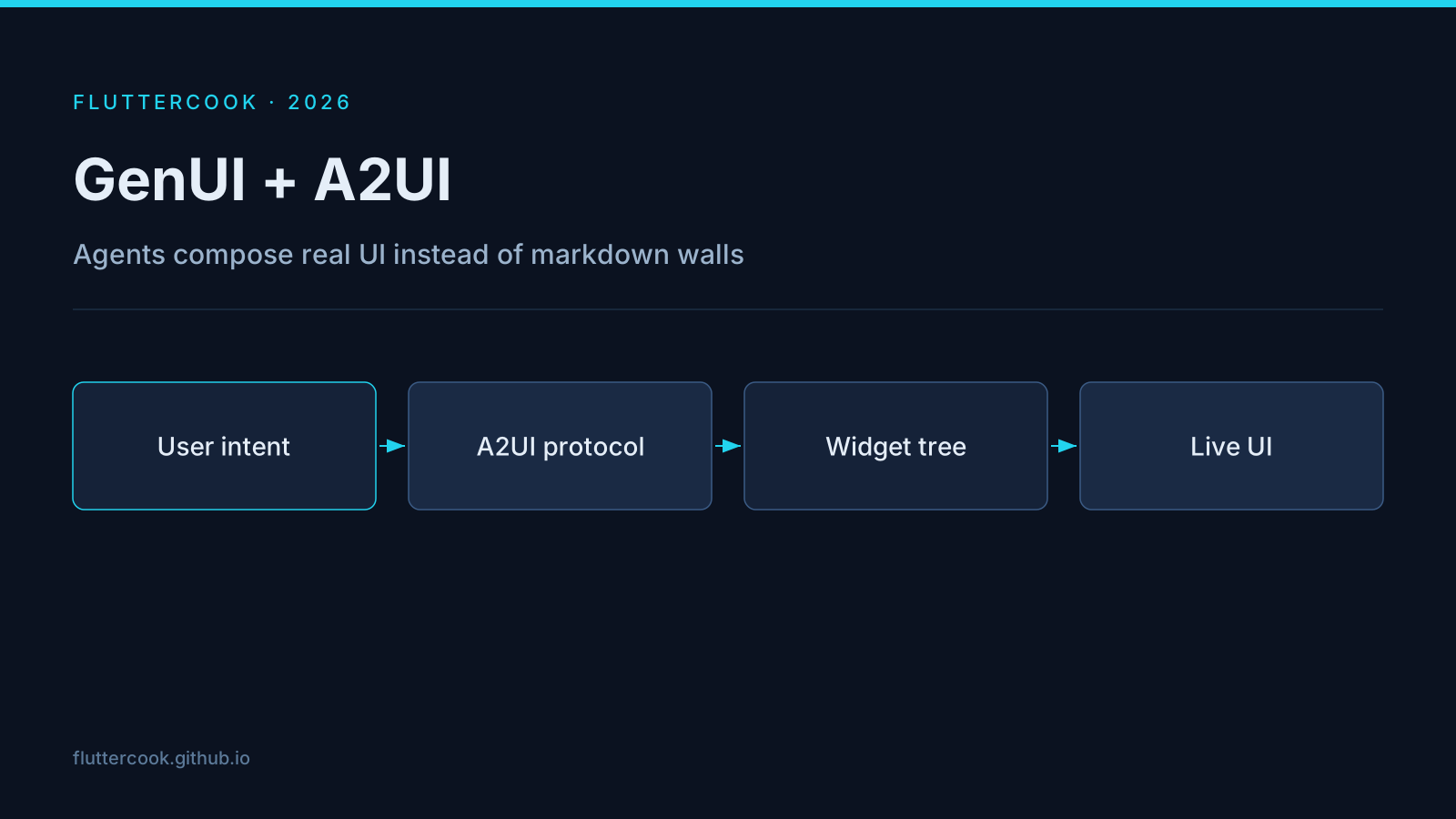
- User intent goes to your backend/agent.
- Agent emits A2UI structure (not free text).
- GenUI maps structure → Flutter widgets in a constrained catalog.
- Events flow back as structured actions the agent can handle.
Design constraints that make it work
- Catalog over chaos. Allow only widgets you designed; do not let the model invent layout physics.
- Critic loop. Validate agent output before paint (empty states, overflow, a11y labels).
- Templates for speed. Hybrid: strong templates + model-filled slots beats pure generation for reliability.
Pitfalls
- Treating GenUI as a theming engine — it is a composition protocol.
- Skipping offline/error UI because “the model will fix it.”
- Shipping without human-readable fallbacks when the catalog cannot express the answer.