animations: reusable Material motion patterns
animations: reusable Material motion patterns
animations is useful because it focuses on OpenContainer, shared axis, fade-through, and route transitions. The important engineering move is to place the package behind a clear boundary, so your Flutter UI depends on a stable capability rather than a vendor-shaped API.
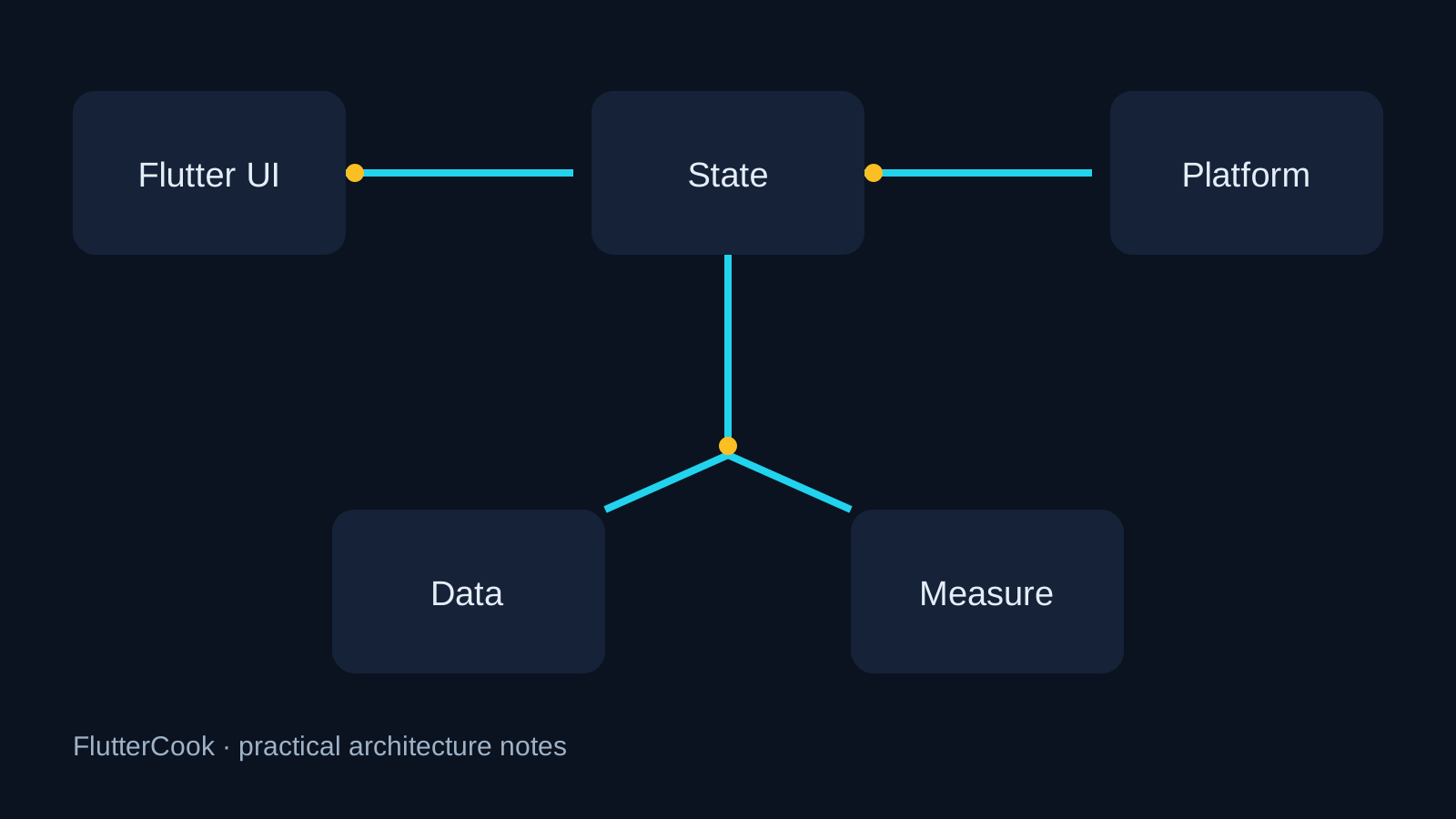
What the library should own
- Keep package calls inside a named adapter or feature boundary.
- Make lifecycle, errors, and loading state part of a testable contract.
- Expose only the capability the app needs; hide implementation details from the whole tree.
A focused starting point
return OpenContainer<bool>(
  closedBuilder: (_, open) => ListTile(
    title: const Text('Open details'),
    onTap: open,
  ),
  openBuilder: (_, close) => const DetailsPage(),
);
Production checklist
- Read the README and changelog for the exact version you pin.
- Add one test for lifecycle, failure, and app background/foreground behavior.
- Verify every platform your product supports, not only the developer machine.
- Record ownership, upgrade cadence, and rollback notes in the repository.
Common pitfall
Motion must preserve hierarchy and state; do not animate every surface just because the package makes it easy.
Takeaway
A good open-source library does not replace architecture. It makes one difficult boundary clearer, observable, and easier to replace.