flutter_hooks: reusable stateful behavior as tiny hooks
flutter_hooks: reusable stateful behavior as tiny hooks
flutter_hooks is useful because it focuses on hook lifecycle, controller ownership, effects, and composable UI logic. The important engineering move is to place the package behind a clear boundary, so your Flutter UI depends on a stable capability rather than a vendor-shaped API.
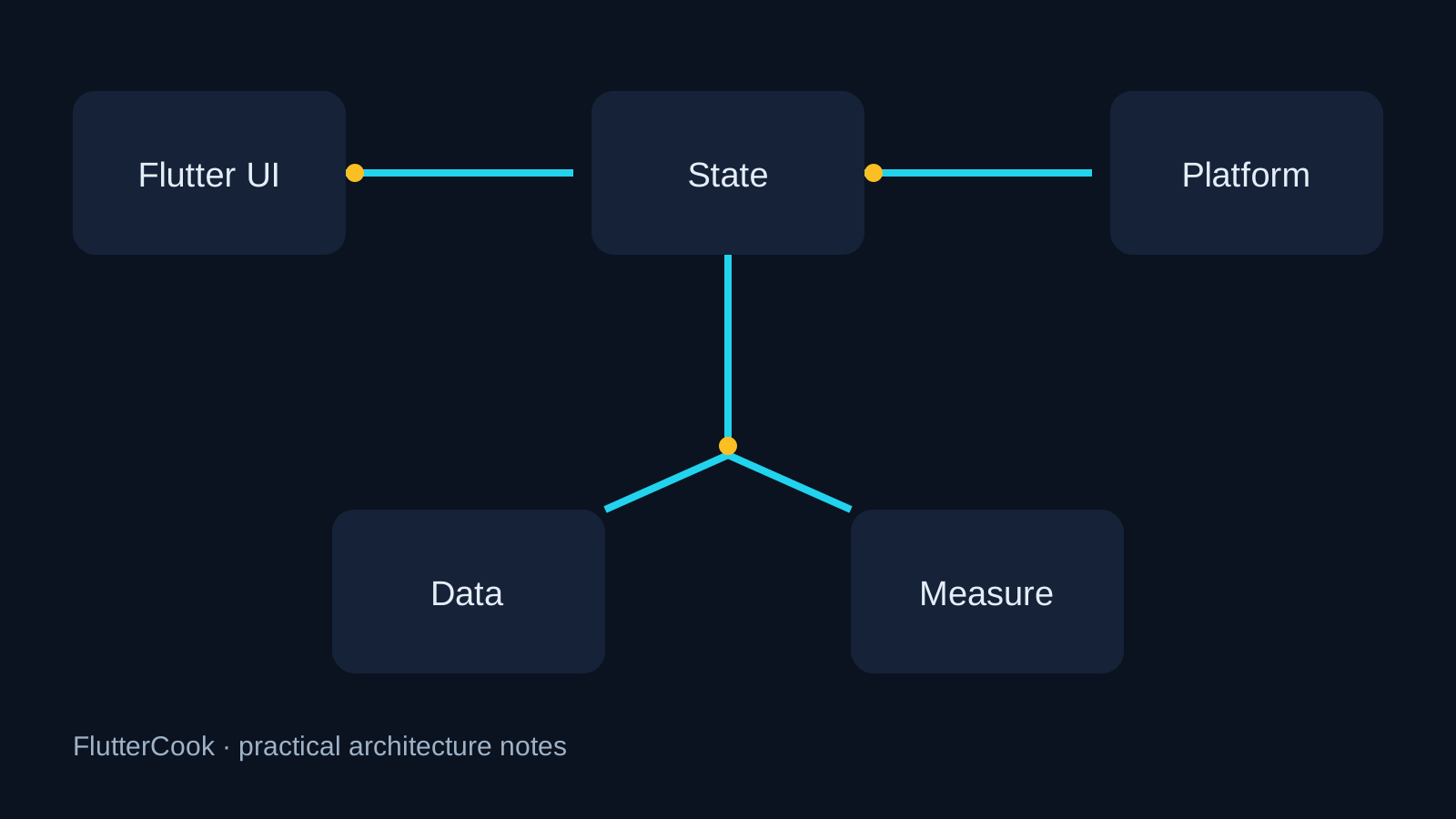
What the library should own
- Keep package calls inside a named adapter or feature boundary.
- Make lifecycle, errors, and loading state part of a testable contract.
- Expose only the capability the app needs; hide implementation details from the whole tree.
A focused starting point
class SearchField extends HookWidget {
  const SearchField({super.key});
  @override
  Widget build(BuildContext context) {
    final controller = useTextEditingController();
    final focusNode = useFocusNode();
    useEffect(() {
      focusNode.requestFocus();
      return null;
    }, const []);
    return TextField(controller: controller, focusNode: focusNode);
  }
}
Production checklist
- Read the README and changelog for the exact version you pin.
- Add one test for lifecycle, failure, and app background/foreground behavior.
- Verify every platform your product supports, not only the developer machine.
- Record ownership, upgrade cadence, and rollback notes in the repository.
Common pitfall
Hooks follow call order; never call them conditionally or inside loops.
Takeaway
A good open-source library does not replace architecture. It makes one difficult boundary clearer, observable, and easier to replace.