Mocktail: readable Dart mocks without generated files
Mocktail: readable Dart mocks without generated files
mocktail is useful because it focuses on fakes, stubbing, verification, fallback values, and test boundaries. The important engineering move is to place the package behind a clear boundary, so your Flutter UI depends on a stable capability rather than a vendor-shaped API.
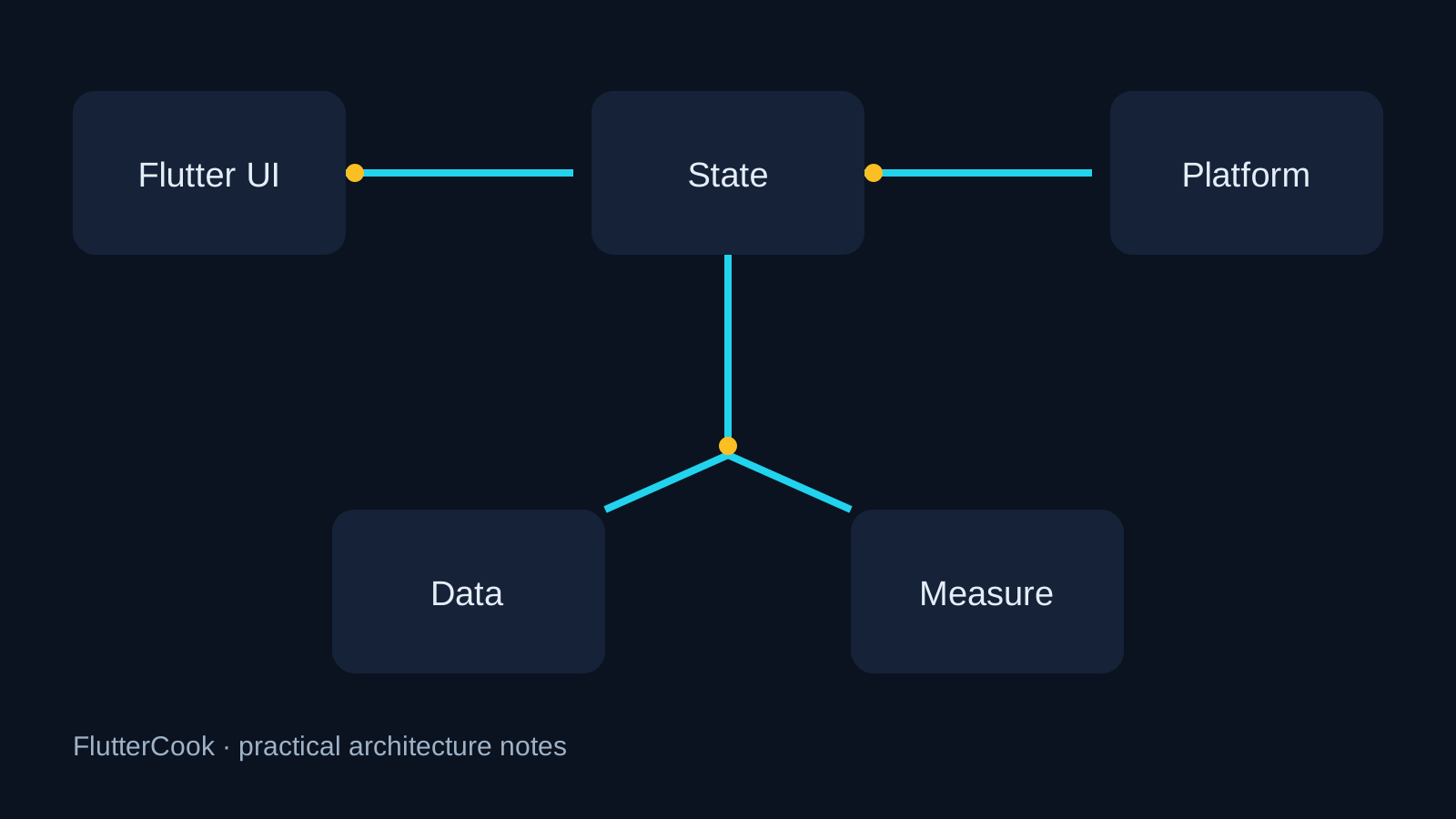
What the library should own
- Keep package calls inside a named adapter or feature boundary.
- Make lifecycle, errors, and loading state part of a testable contract.
- Expose only the capability the app needs; hide implementation details from the whole tree.
A focused starting point
class MockUserApi extends Mock implements UserApi {}

final api = MockUserApi();
when(() => api.fetchUser('42')).thenAnswer((_) async => user);
final result = await repository.load('42');
verify(() => api.fetchUser('42')).called(1);
Production checklist
- Read the README and changelog for the exact version you pin.
- Add one test for lifecycle, failure, and app background/foreground behavior.
- Verify every platform your product supports, not only the developer machine.
- Record ownership, upgrade cadence, and rollback notes in the repository.
Common pitfall
Mock at the boundary you own; mocking every internal class makes refactors expensive.
Takeaway
A good open-source library does not replace architecture. It makes one difficult boundary clearer, observable, and easier to replace.